AI Agent for API Connect
Enterprise API workflows are filled with tedious, information-intensive tasks that drain developer productivity. These complex processes presented a perfect opportunity to leverage AI to transform user experience.
Product
IBM API Connect - an award winning API lifecycle management platform.
Vision
An API Agent that cuts down development time by supporting users throughout the entire API lifecycle.
Role
As a lead designer, I delegated to other designers, strategized with lead PM and engineers and coordinated with our dev teams across the world.
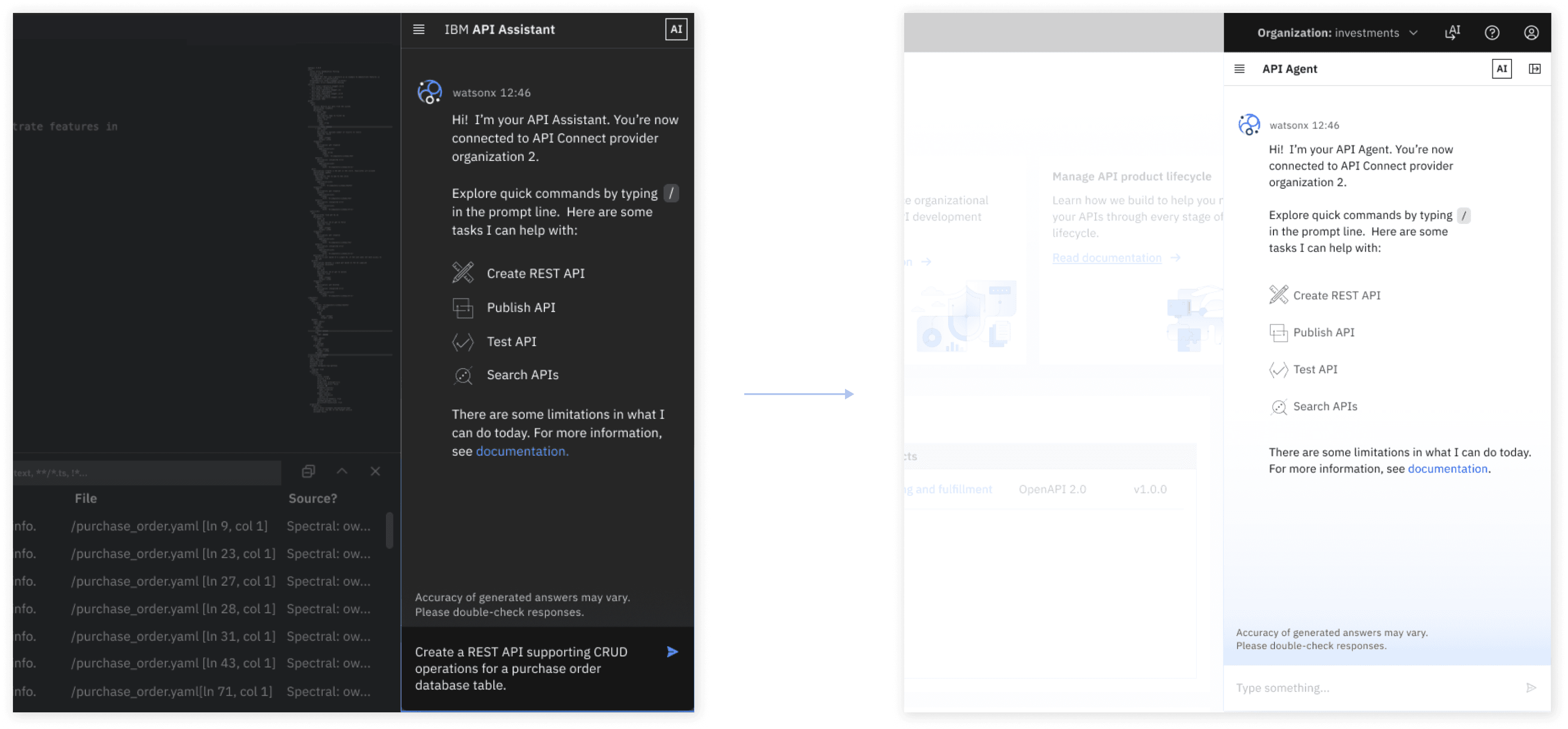
Where it started: a VS Code plug in
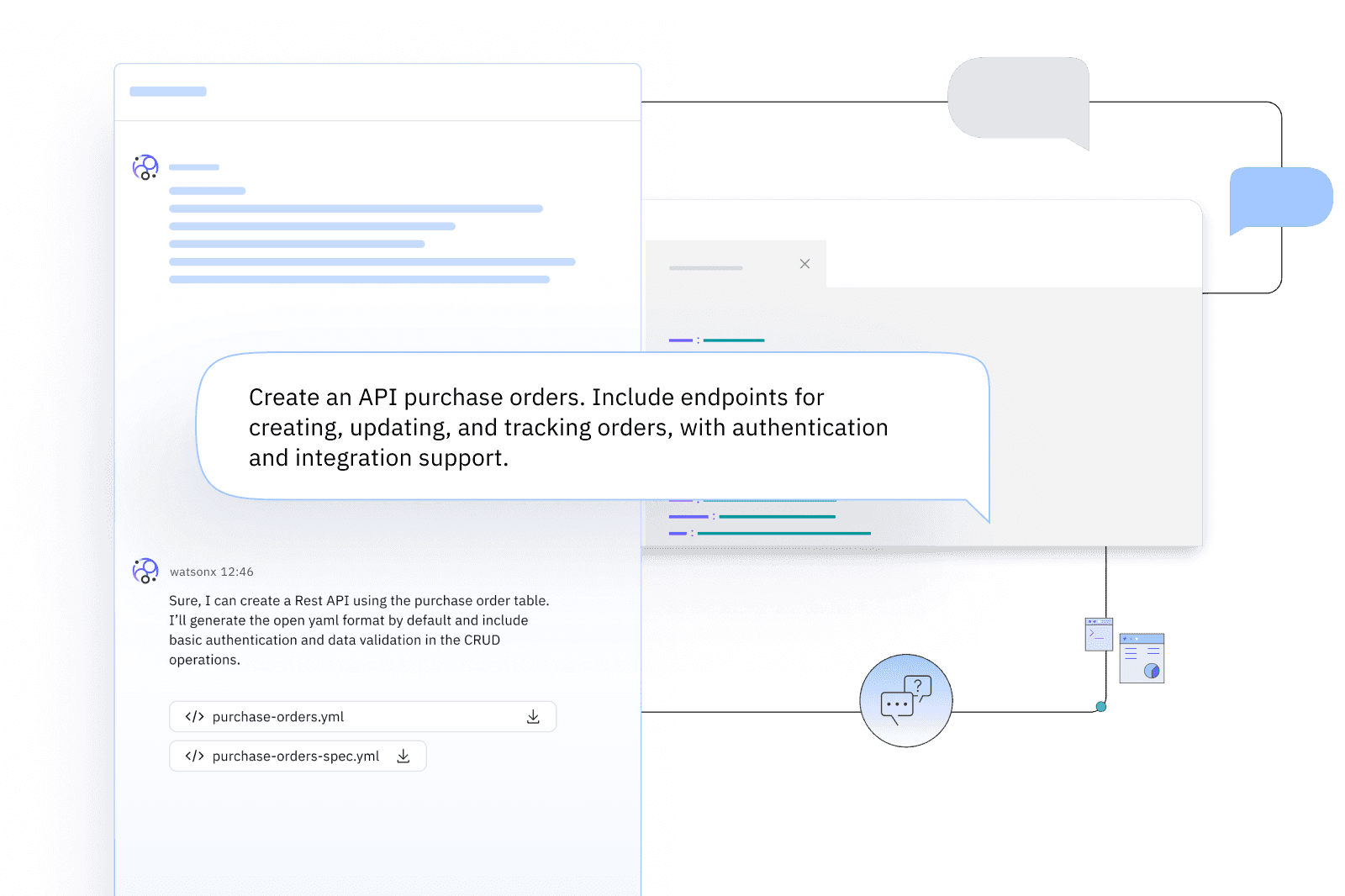
This flow is showing the API agent helping generate and secure an API. I started here, taking over this project from another designer.

And helped scale to embed within our products (right).
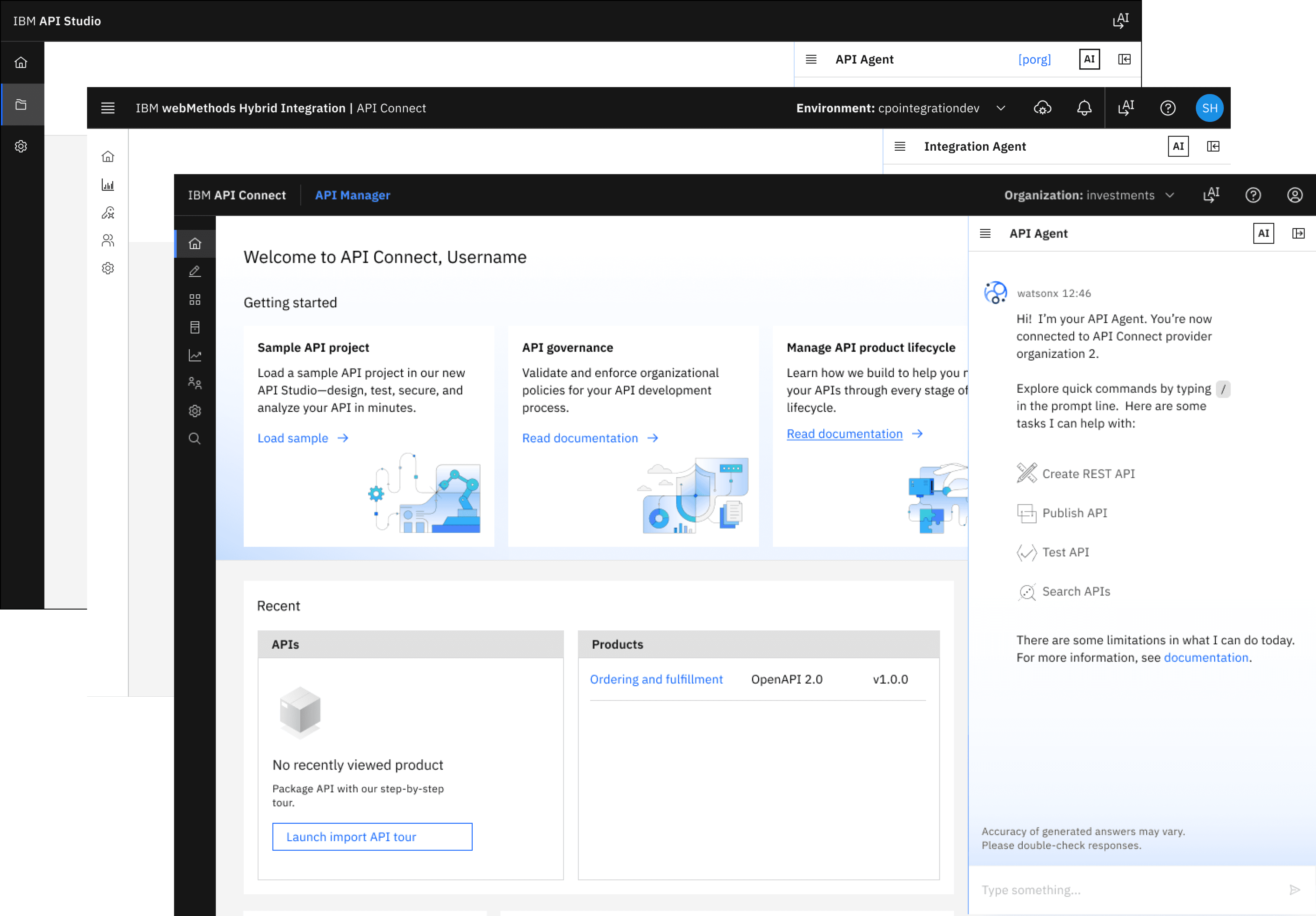
These products include:
Challenges
Convergence with an acquisition
Agentic improvements
Rapidly evolving design system
Aggressive timeline (~6 weeks)
With all this in mind, we iterated quickly to get to this next version of an API agent that would maintain existing plugin functionality, while pushing for the best UX possible with the agentive improvements in progress. Lastly, we for fitting opportunities to adopt the latest design patterns.
The user: Sasha, API Developer

Designs, builds, and maintains APIs for internal and external consumption.
Sasha builds an API with API Agent

Fixes API errors with API Agent

Impact
Quicker API creation
API Agent helps Sasha generate the currency exchange API that she needed -- in seconds.
Error free deployment
Sasha can validate her API against all rulesets and fix all errors with a few clicks or a single prompt.
Iterative improvements
Building AI trust - add reasoning
With the new agentic improvements, we were able to add some reasoning to agent responses.
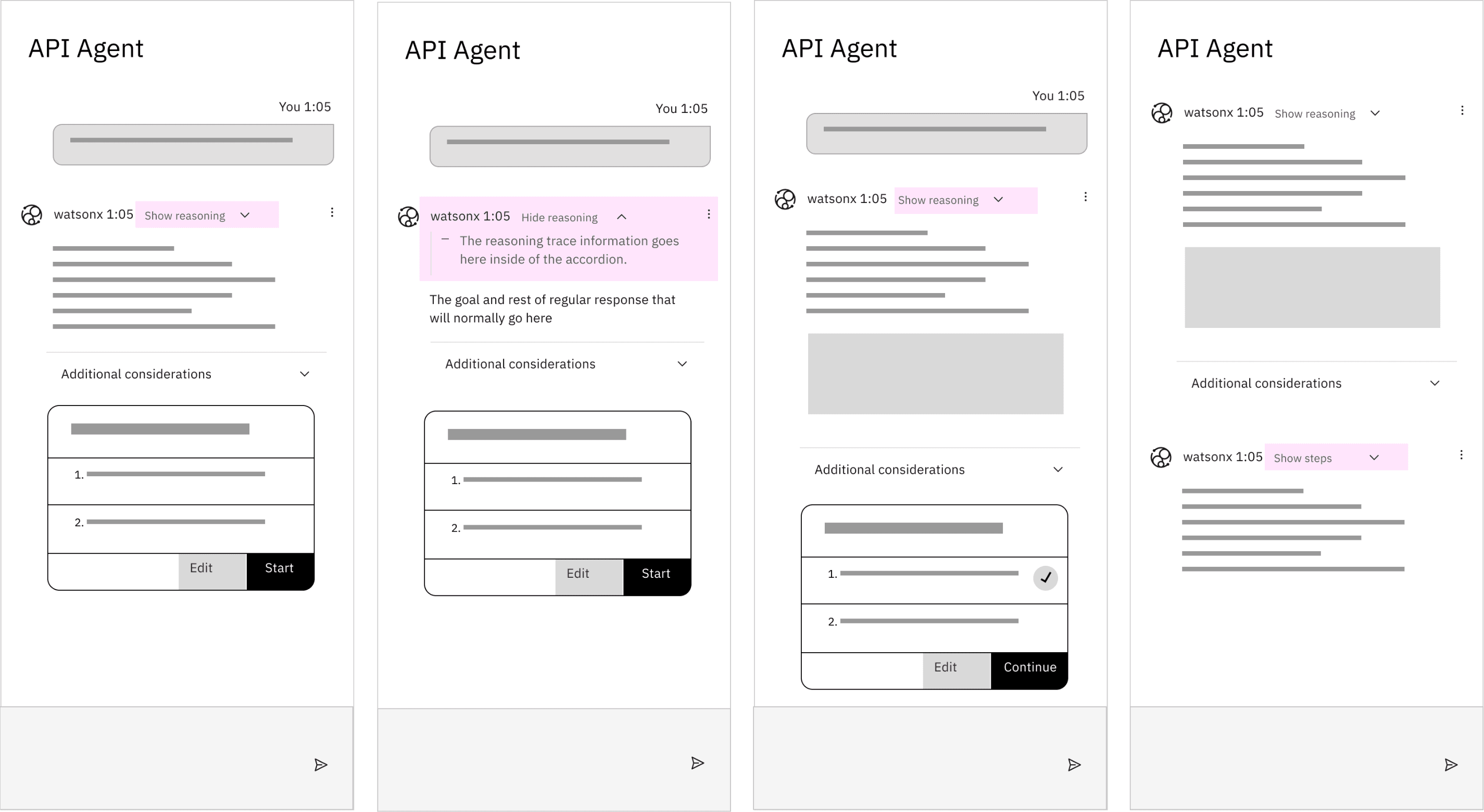
Add reasoning. With the new agentic improvements, we were able to add some reasoning to agent responses.
Building AI trust - conversation modes (future)
Worked with a UX researcher to understand if users preferred to approve before agent executes a task or immediate execution.

Executes automatically

User approval required
The results were split between individuals and tasks.
Users showed preference for the pattern on the left because it felt more like chat GPT, but also said that they wouldn't trust AI for more complex tasks.
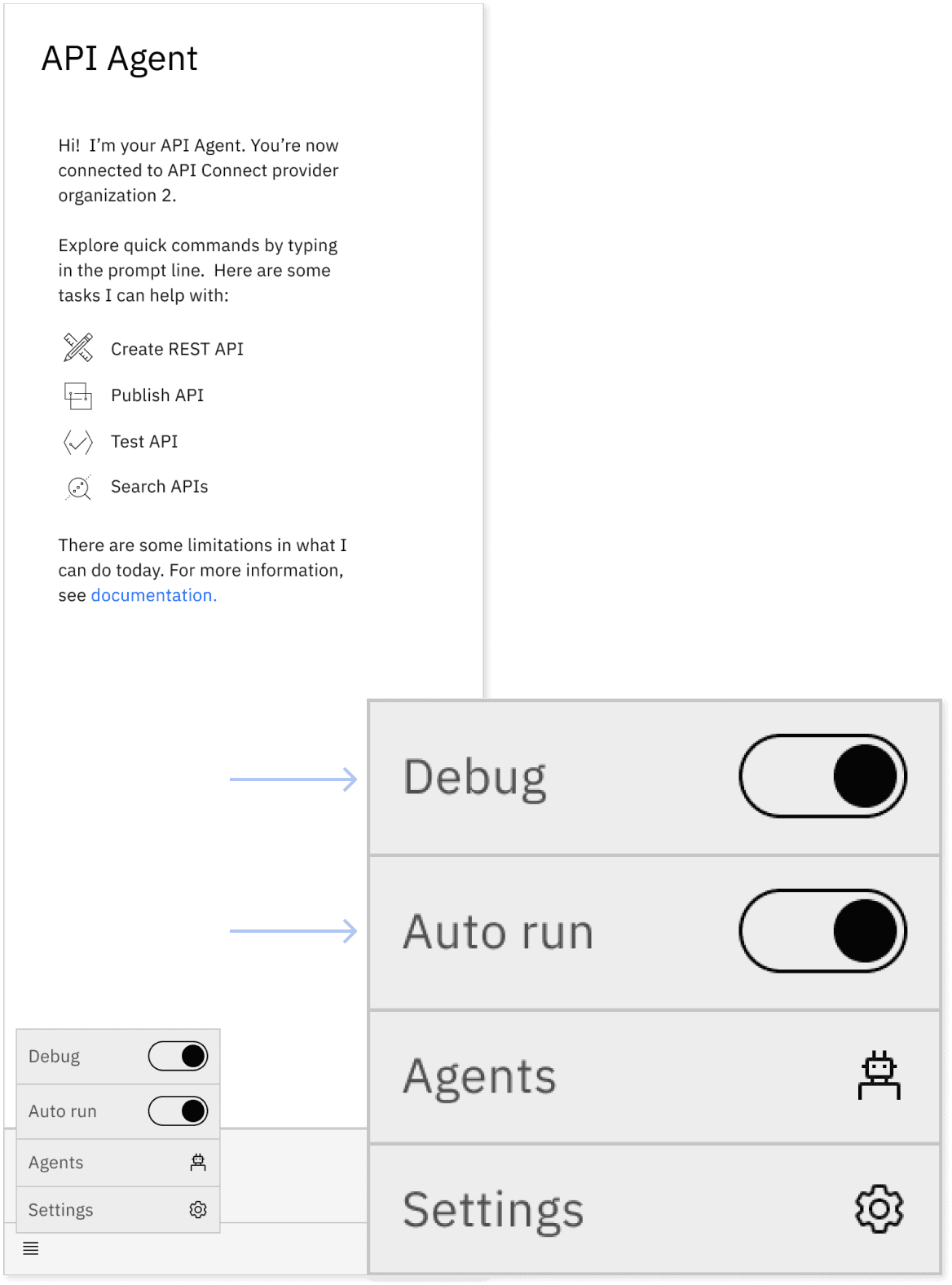
This was my design recommendation based on research findings.
Gives the user more control. Users can easily switch off 'Auto run' and switch on 'Debug' for more control and information when extensive audit trail is helpful.
Better discoverability + Onboarding (future)
Provide more signifiers that let users know what API agent can do.
Explored how we can accomplish two things at once: leverage API Agent to help onboard users to the API Developer Studio (new experience that came with convergence), while introducing key agent capabilities.
Hypothesis: if developers are met with a new and empty developer studio, they have more incentive to try gen ai features. And if users can quickly fill their empty developer studio with relevant content, they will be able to more quickly grasp the new architecture and get onboarded more quickly.
Worked with researcher to get some feedback here and users found it useful but had some worries around control.
